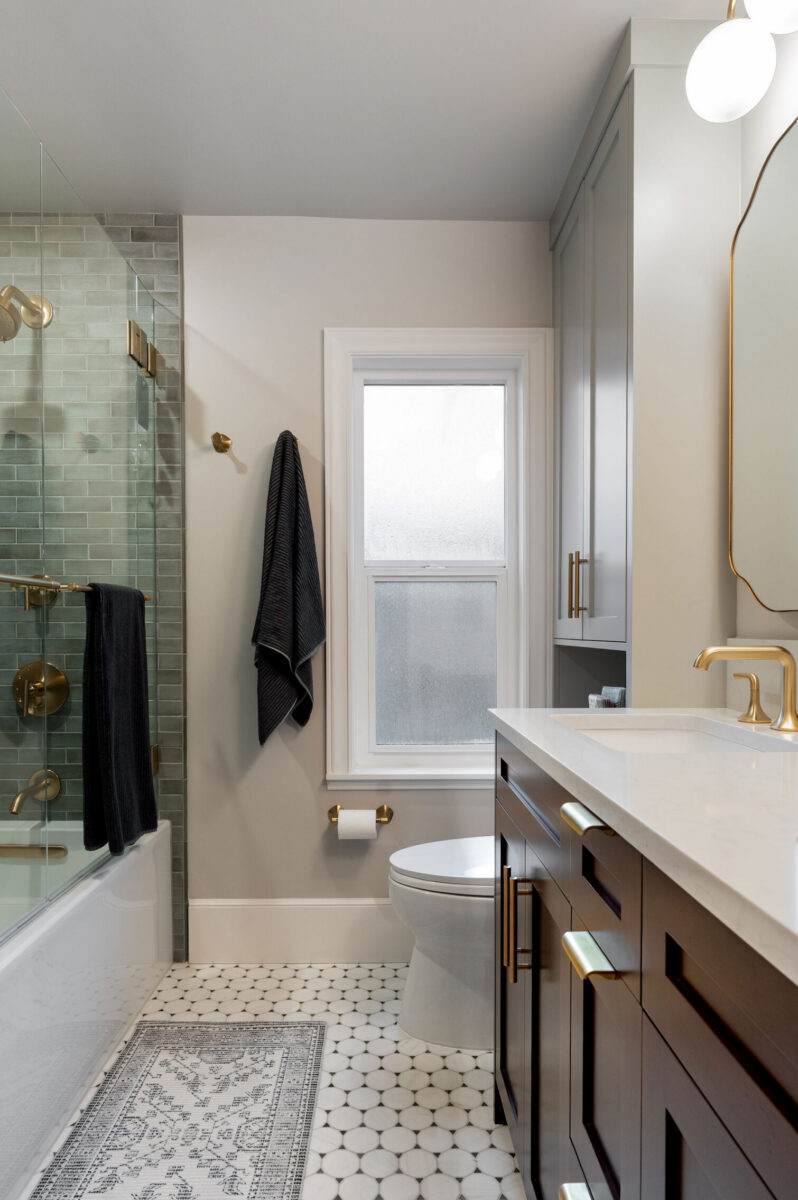
A successful remodel usually starts with a vision. Maybe you want a brighter, more welcoming kitchen, a bathroom that works better for your family, or a layout that finally makes sense for the way you live. That vision is where the conversation begins, but bringing it to life requires much more than choosing finishes that look beautiful together.
Early in the design process, we start working through a long list of questions with our clients. What flooring will hold up to the way your family uses the space? Will the cabinetry accommodate the appliances you have in mind? Does the countertop you love still make sense once fabrication and installation are factored into the budget? How will the availability of a particular product affect the construction schedule? These decisions are all connected.
At Crescent Builds, we approach material selection as an integral part of the design and construction process, not something that happens at the end, after the plans are complete. The materials we select influence the design, budget, schedule, installation, and ultimately how the finished space performs over time. Our goal isn’t to overwhelm homeowners with hundreds of choices. It’s to help you make the right decisions at the right time, with a clear understanding of how each one contributes to the project as a whole.
Material Choices Shape the Project Earlier Than You Might Expect
It’s easy to think of material selection as a finishing step. You establish the layout first, then choose cabinetry, flooring, tile, countertops, and paint once the design is further along. In practice, these decisions are much more interconnected. The materials you choose can influence dimensions, structural requirements, installation methods, and the sequence of construction. Large-format tile may require additional floor preparation. A heavier countertop can require additional support. Custom cabinetry may have a lead time that needs to be accounted for months before installation.
This is one of the advantages of bringing design and construction together under one roof. At Crescent, our designers and construction team are considering these details together throughout the process. We aren’t simply designing a space and then figuring out how to build it later. We often meet with homeowners who already have a strong sense of what they want their finished space to look like. That’s a great place to start. Our role is to help translate that vision into a design that can be built within the realities of the existing home, budget, and schedule. Experience plays an important part in that translation.
Good Design Has to Work With the Materials Behind It
A design can look beautiful on paper or on a screen, but the real test comes when it’s time to build. When we’re evaluating a material with a client, we’re looking beyond its appearance. How will it be installed? What preparation will the existing space require? Does it work with the rest of the construction plan? How long will it take to arrive? Is there anything about the product that could create complications later?
Asking those questions early doesn’t limit the design. It helps protect it. For example, a homeowner may fall in love with a particular style of cabinetry during the design process. If that cabinetry has a four-month lead time, we need to know that before the construction schedule is established, not after demolition is complete. The same can be true of specialty tile, custom windows, hardware, appliances, and other products with longer or less predictable lead times. The earlier we understand what materials will be part of the project, the more effectively we can plan around them.
Materials Affect More Than the Final Budget
When comparing materials, it’s natural to start with the price tag. But the cost of a material doesn’t end with the product itself. Delivery, preparation, installation, maintenance, and even the condition of the existing space can all affect the final cost. Two tile options may have similar prices per square foot, for example, but their size, shape, pattern, and installation requirements can result in very different labor costs. The same applies to a kitchen remodel, where cabinetry is only one piece of a larger system that may also include hardware, countertops, appliances, electrical work, plumbing, and other related changes.
This is why we look at material decisions in the context of the entire project. That doesn’t mean every selection needs to be the most expensive option. In fact, some of the best decisions are about where to invest and where to be more practical. A project with a thoughtful budget isn’t necessarily spending more. It is directing resources toward the elements that matter most to how the space looks, functions, and holds up over time.
Availability Can Affect the Construction Schedule
One of the less visible parts of material selection is timing. Some products are readily available, while others need to be ordered weeks or months in advance. That distinction can have a significant impact on when work can happen and how the project is sequenced. Cabinetry, windows, doors, appliances, and custom finishes can all have different lead times. A delay with one important component can affect the work that follows it, particularly when multiple trades are depending on that installation. This is why we don’t treat every selection as equally urgent.
Part of our job during the design process is identifying which decisions need to be made first based on lead times, fabrication requirements, and the construction schedule. That allows our clients to spend their time thoughtfully considering the selections that matter most without feeling like every decision has to happen at once. It also gives us more opportunity to address an unavailable or delayed product before it becomes a construction problem.