There’s a particular kind of cabin fever that sets in around here in January: the rain settles in, the light goes gray, and the backyard you loved all summer sits unused on the other side of a closed door. Indoor-outdoor living is the design answer to exactly that problem: it dissolves the hard line between inside and out so your whole property becomes part of how you live, in every season. In the Pacific Northwest, where the desire to be near nature runs headlong into nine months of weather, thoughtful indoor-outdoor living is less a trend than a survival strategy and, done well, one of the most joyful upgrades you can make to a Seattle home.
As Emilee Birrell, Principal at Crescent Builds, puts it: “Outdoor spaces are important for everybody. Breathing fresh air, having fresh air come into your home, is a beautiful and important part of living as a human being.”
Below is a look at why indoor-outdoor living resonates so strongly here, the features homeowners are asking for most, the practical things to weigh before you start, and six of our favorite indoor-outdoor projects we’ve helped Seattle-area clients bring to life.
The benefits of indoor-outdoor living
Indoor-outdoor living is a design approach that thoughtfully knits a home’s interior and exterior together so the two flow as one. That easy connection does more than look good. It changes how a home functions day to day.
A year-round connection with nature
Here in the Pacific Northwest, the colder months feel especially long and dark, and the constant rain makes it hard to get outside and enjoy the beauty that surrounds us. That’s why interest in “three-season” spaces keeps growing. A covered patio with heat lamps and sliding doors that open onto the kitchen lets you use the outdoors year-round, and it’s the difference between a yard you visit for a few weeks in July and one that’s genuinely part of your home in February.
More room to gather and entertain
If you love hosting and using your home as a hub, indoor-outdoor spaces open up creative ways to bring people together. An outdoor kitchen, a covered seating area with a fire pit, a pizza oven off the patio: a well-designed connection gives you more room to work with and lets you enjoy time with the people you love, even in the rainy season.
Natural light and fresh air
Beyond getting you outside, indoor-outdoor spaces pull more daylight deep into the house, a real game-changer for health and mood when the sun is stuck behind gray clouds for months. They also improve airflow. As Emilee notes, letting fresh air move through your home isn’t a luxury; it’s part of feeling well in the place you live.
Added property value
Many indoor-outdoor upgrades elevate daily life and resale value at the same time. An article from HomeLight estimates a new patio can return around 109% of its cost, and online searches for features like outdoor kitchens keep climbing. As long as you stay mindful of your budget, a beautiful indoor-outdoor space can make your home both more livable and more attractive on the market.
Popular indoor-outdoor living ideas
These spaces run the gamut, from a simple covered seating nook to a full entertainment zone with a kitchen, fire feature, and more. In their 2024 Outdoor Living Trends Report, Fixr surveyed top architects, builders, and designers and identified five features leading the way.
1. Outdoor kitchens
Fixr found that 73% of architects and homebuilders call outdoor kitchens the most in-demand backyard feature. ROI varies, but homeowners love the lifestyle upgrade, and a covered outdoor kitchen turns a patio into a true second gathering space.
2. Pocket and sliding doors
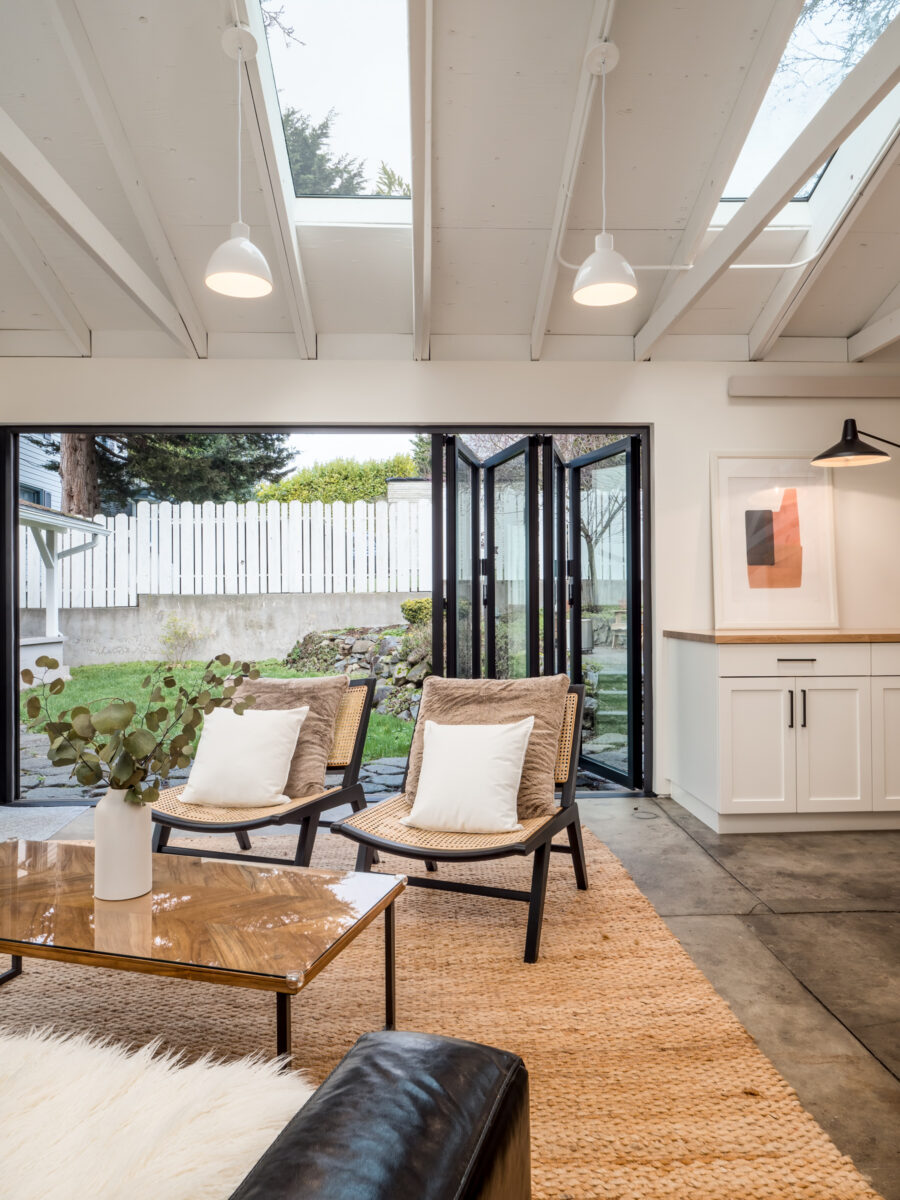
Sixty-five percent of experts named pocket and sliding doors a top request. They’re one of the best ways to create a seamless connection, letting you open a whole wall between the kitchen or dining room and the patio or fire-pit area. A retractable glass-wall system takes this the furthest, making the boundary between inside and out all but disappear.
3. Fire features
For a space that works year-round, a fire pit or outdoor fireplace is hard to beat: a cozy gathering spot in the cold months and a natural draw on a cool summer evening. It’s the feature that keeps an outdoor space in use long after the last warm day.
4. Water features
Swimming pools tend to split people: a dream on a hot day, but our sunshine can be scarce. That’s why many Seattle homeowners look to water features that get more use (a covered hot tub or an invigorating cold plunge) rather than a full pool.
5. Outdoor work-from-home spaces
Remote and hybrid work made the outdoor office a keeper. These range from a covered patio with a work table to a fully built detached studio, and the best ones are designed for flexibility: a place to work during the week and gather or pursue a hobby on the weekend.
Design the transition, not just the destination
One piece that’s easy to overlook: the transition between inside and out. An indoor-outdoor connection isn’t only the beautiful patio at the end. It’s the doorway, the threshold, and the everyday moment of moving between spaces with bags, backpacks, shoes, and rain gear in hand.
Despite our weather, many Seattle homes were built without a mudroom or a dedicated transition zone at the main entry. When that space is cramped or missing, the result is clutter and stress every time the family comes and goes. Building in real entry storage (hooks, benches, cubbies, a place for wet coats and muddy boots) keeps the space tidy and the whole connection working. And a well-lit entry, whether from natural light or thoughtful fixtures, makes coming and going feel welcoming rather than harried. A great indoor-outdoor home gets the arrival right, not just the view.
Kitchens are one of the most common places to add an indoor-outdoor connection during a remodel. As the hub where family and guests naturally gather, a kitchen benefits enormously from an easy link to the outside: an oversized window over the sink to watch the kids in the yard, or a seamless path to an outdoor cooking and dining area. And a home isn’t limited to a single connection. The best question to ask is: where in your home do you most want to see, reach, or step into the outdoors, and which rooms does your family actually live in all day?